Is Rice Actually Unhealthy? What Nutrition Science (and Your Grandmother) Actually Say
Rice gets blamed for a lot. Here's what nutrition science — and traditional South Indian meals — actually say about eating rice.
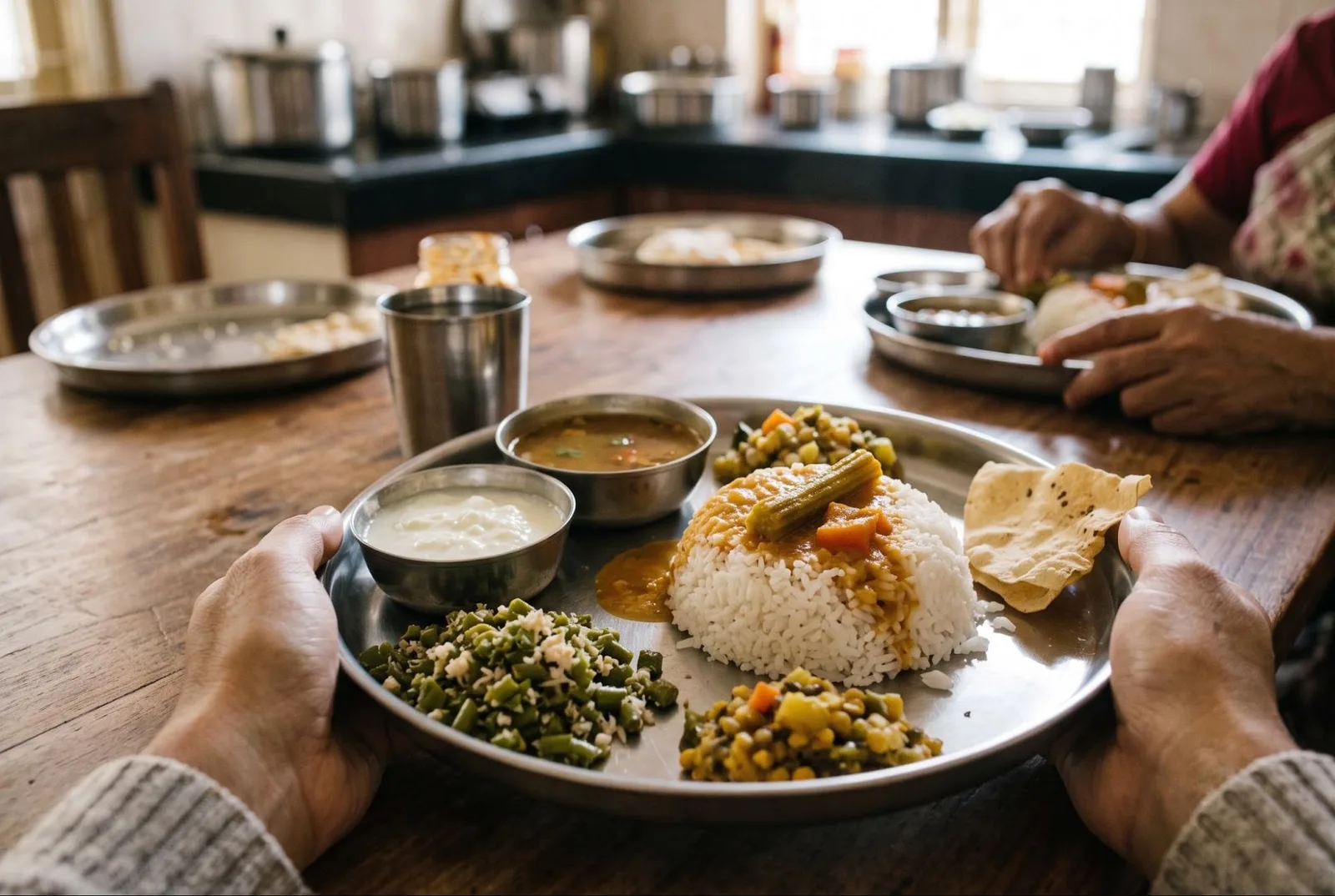
For most South Indians, rice is not some occasional side dish.
It is lunch. It is curd rice when you are tired. It is sambar sadam on a weekday. It is rasam rice when nothing else sounds right. It is lemon rice packed for a journey and thayir sadam at the end of a proper meal.
And yet, somewhere along the way, rice became the food everyone started feeling guilty about.
- "Rice makes you gain weight."
- "Don't eat rice at night."
- "Switch to brown rice."
- "Cut carbs completely."
Nutrition is rarely that simple.
Rice Is a Carbohydrate. That Is Not Automatically a Bad Thing.
Carbohydrates are one of the body's main sources of energy. The bigger question is not whether your meal contains rice. It is what the rest of that meal looks like.
Think about a typical South Indian lunch. Rice might sit at the centre of the plate, but it is rarely meant to be eaten completely on its own. There is sambar or kuzhambu. A poriyal or kootu. Maybe rasam. Curd. Sometimes eggs, chicken, fish or another source of protein.
That entire plate matters more than judging the rice in isolation.
Harvard's Nutrition Source makes a similar point about carbohydrates: the quality of the overall diet matters more than simply trying to eliminate carbs altogether.
So instead of asking "Is rice bad?" — a more useful question is "What am I eating with my rice?"
What About White Rice vs Brown Rice?
Brown rice contains parts of the grain that are removed when white rice is processed, so it naturally has more fibre and certain nutrients.
That does not automatically mean everyone eating white rice is doing something wrong. For many South Indian households, white rice is simply the grain people have grown up eating. And food has to work in real life.
If you enjoy white rice, the more practical approach may be to look at portion size and what accompanies it rather than forcing yourself to eat something you do not enjoy because it sounds healthier.
Look at the Whole Plate
There is a big difference between eating a large plate of plain rice with very little else and eating rice as one part of a varied meal.
A serving of rice with sambar, beans poriyal, curd and an egg is doing something very different from a plate where rice takes up nearly everything.
Even traditional South Indian meals naturally understand this idea of variety. You have grains. Lentils. Vegetables. Fermented foods like curd. Different textures. Different preparations.
The plate does not need to look like a nutrition infographic. It just should not depend entirely on one food group.
So, Should You Stop Eating Rice?
For most people, there is no reason to suddenly treat a food they have eaten their entire life like the enemy. Instead, pay attention to:
- How much rice is on the plate
- What you are eating alongside it
- How often vegetables and protein show up in your meals
- How varied your food is across the week
Of course, individual needs differ, especially for people managing diabetes or another medical condition, so personalised advice should come from a qualified healthcare professional.
Your grandmother probably never called it "balanced macros." She probably just served rice with sambar, poriyal, curd and something on the side.
Turns out, the plate was doing more thinking than we gave it credit for.
Looking for everyday South Indian meals that fit naturally into your routine? Explore Myna Kitchen's meal plans.
Get a call back
Leave your number — we'll recommend the right option, usually the same day.